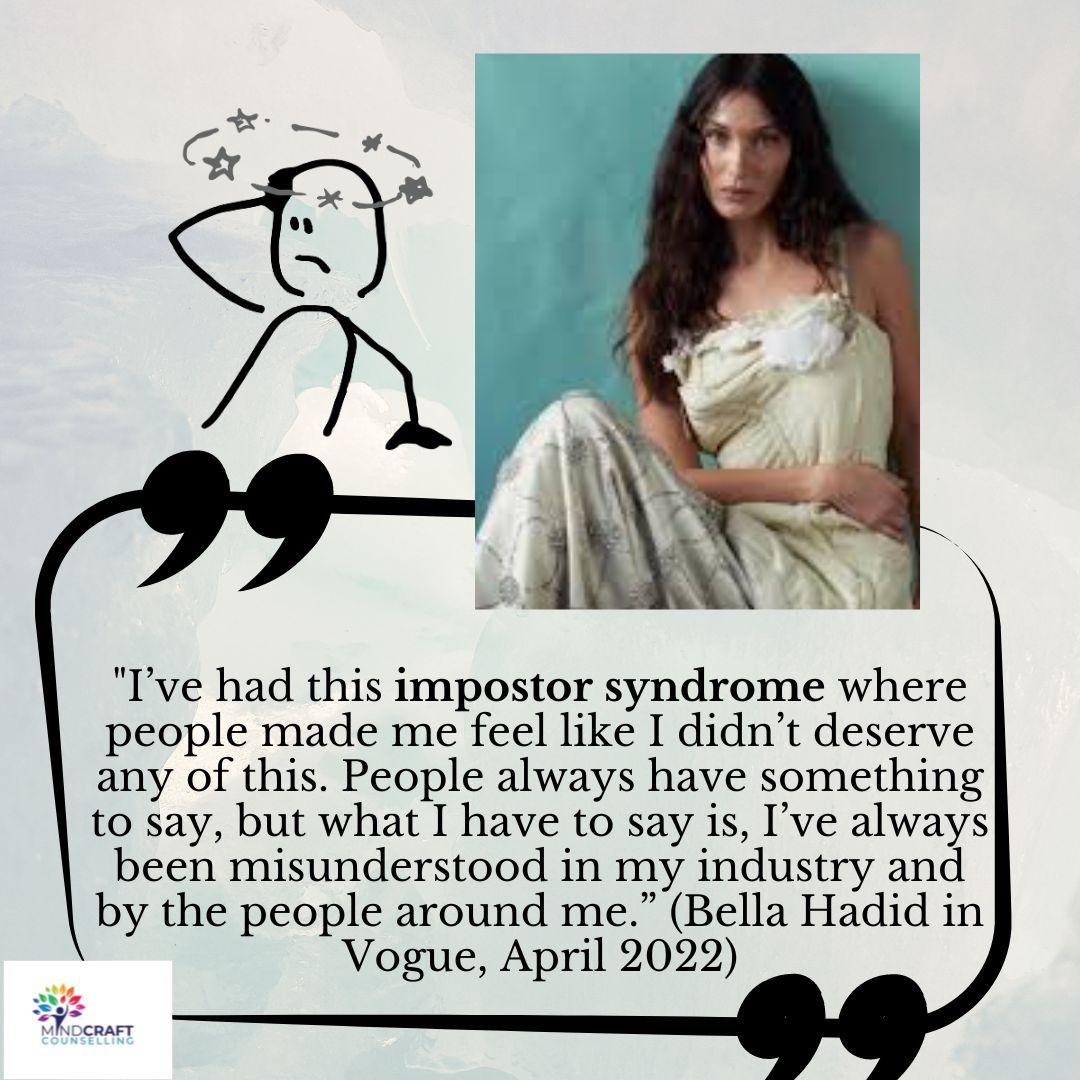
Bella Hadid, a globally recognised model, told Vogue in 2022 that she'd lived with impostor syndrome — a sense that people made her feel she didn't deserve any of what she'd achieved. If someone whose face is on billboards can carry that quiet doubt, it tells you something useful: success and recognition don't switch it off. Impostor syndrome isn't a sign that you've achieved too little. It often shows up most loudly in people who've achieved a great deal.
What impostor syndrome actually feels like
At its core, it's the persistent belief that you've fooled everyone. You did well, but it was luck, timing, or someone being generous. Real competence, you assume, lives in other people. So you wait to be found out. Each new achievement raises the stakes rather than the confidence, because now there's more to lose when the truth comes out — except the truth never does, because there's nothing to expose.
People describe it in a few recurring ways:
- Crediting luck or other people for things you genuinely earned
- Feeling like a fraud despite clear evidence of skill
- Overworking to prove yourself, then dismissing the result
- Brushing off praise while absorbing every criticism
Where it comes from
Notice what Bella said next — that she'd always felt misunderstood, by her industry and by the people around her. That pairing matters. Impostor feelings rarely appear out of nowhere. They often grow in environments where you were judged, compared, or made to feel you had to earn your place again and again. When the people around you keep questioning whether you belong, you eventually internalise the question and start asking it yourself.
It can also come from being the first or the only — the first in your family to reach a certain point, the only one who looks like you in the room. Without familiar reference points, the mind reaches for the harshest explanation: maybe I slipped through.
What helps
You don't argue impostor syndrome away by repeating that you're brilliant. The feeling tends to ignore counter-evidence. What helps more is changing your relationship to the thought rather than its volume.
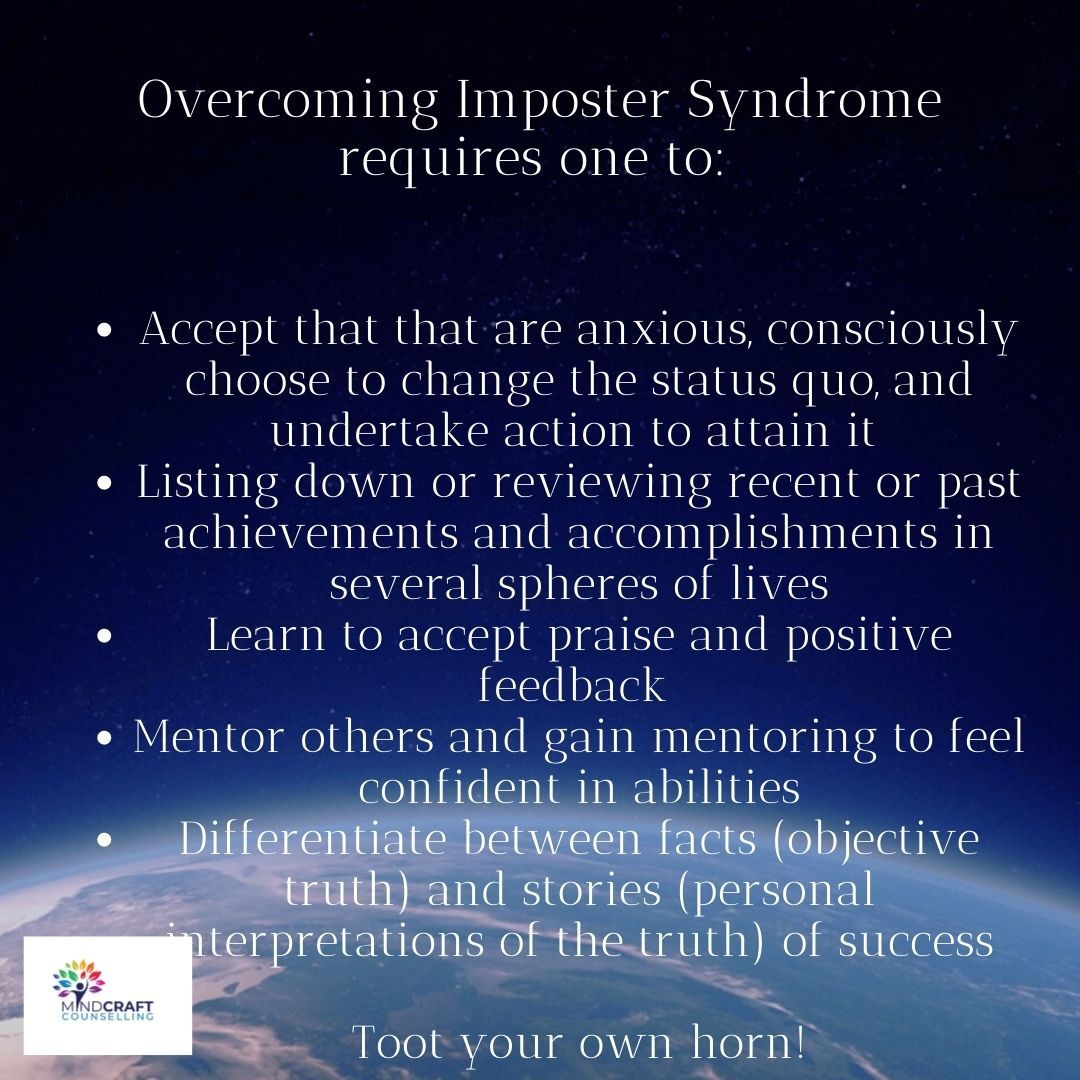
Start by naming it. "This is the impostor feeling, not a fact" creates a small gap between you and the thought. Keep a record of concrete things you actually did — not how you felt about them, just what happened. When the doubt insists it was all luck, you have something to look at.
Talk about it, too. A striking thing about impostor syndrome is how much it relies on silence. The moment you say it aloud to someone you trust, you usually discover they've felt it as well. That shared recognition does something the inner monologue can't: it shows you that doubting yourself and being capable are not opposites. They live in the same person all the time.
If the feeling is shaping your choices — making you shrink, overwork, or refuse opportunities you've earned — that's worth exploring with a counsellor. Not because something is wrong with you, but because you deserve to feel some ownership of a life you've worked hard to build. You're allowed to be here.