Resistance shows up in almost every counselling room. A client agrees to try something and then quietly doesn't. Someone changes the subject the moment things get tender. Another person nods along but keeps the real story tucked away. It's tempting to read this as a lack of willingness, but resistance is usually doing a job — protecting a person from change that feels unsafe, exposing, or simply too fast. The skill, for a counsellor, is to ease that protection rather than force it.
Why resistance happens
Change asks people to let go of something familiar, even when the familiar thing hurts. A coping habit, a belief about themselves, a way of avoiding pain — these served a purpose once, and the mind doesn't surrender them easily. When a client pushes back, slows down, or disengages, that's information, not defiance. The work isn't to overpower it. It's to understand what the resistance is guarding and to make the path forward feel less threatening.
Five gentle techniques
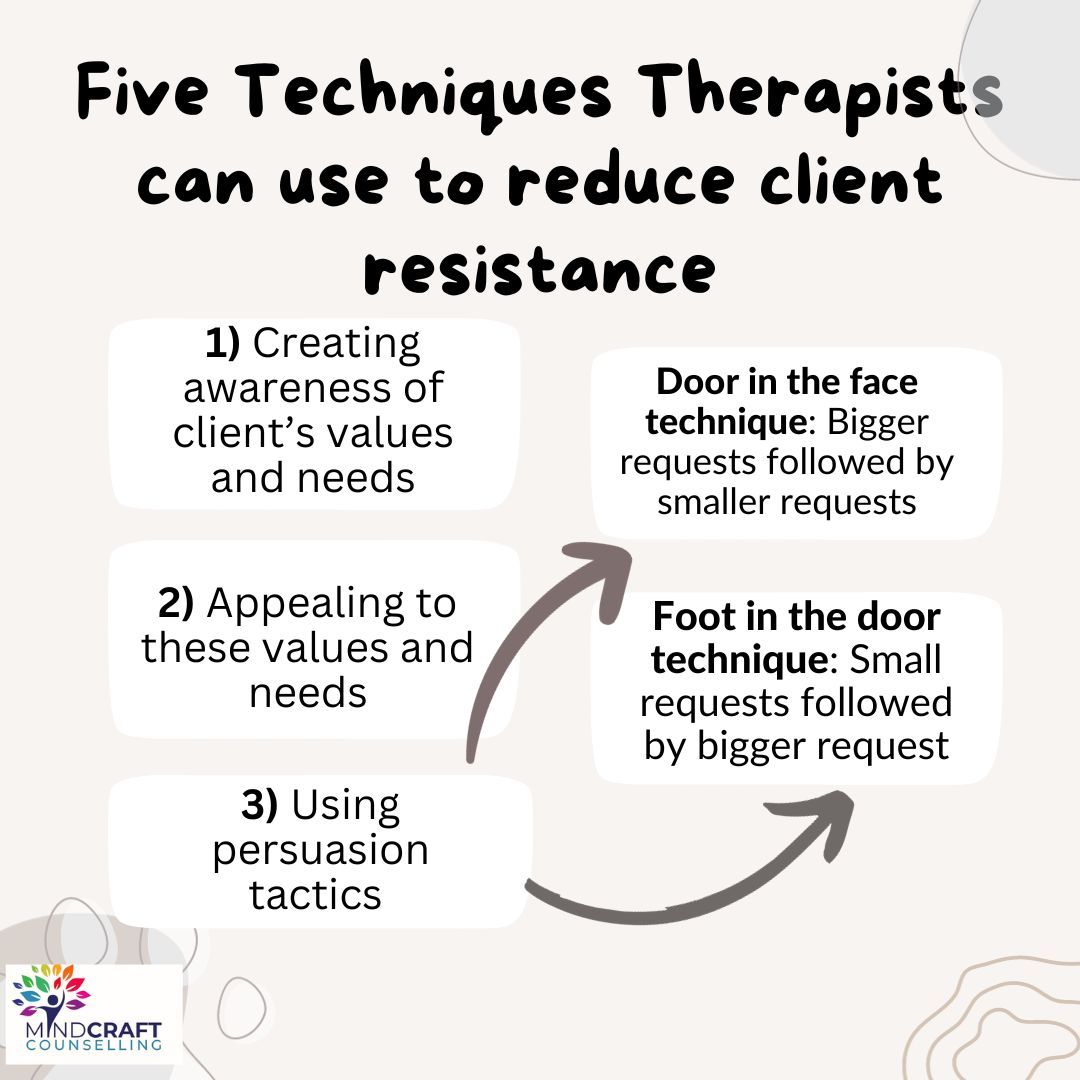
Here are five approaches counsellors lean on to lower resistance, drawn from how persuasion and motivation actually work.
- Creating awareness of the client's values and needs. Before suggesting any change, a good counsellor listens for what matters most to this person — connection, dignity, freedom, safety. Naming those values brings them into the open.
- Appealing to those values and needs. Change feels worth the discomfort when it's tied to something the client already cares about. "You've told me being a steady parent matters to you" lands far better than a generic instruction.
- Using persuasion thoughtfully. Not manipulation — gentle, honest influence that helps someone see a possibility they'd been resisting.
- The door-in-the-face approach. Here a larger request comes first, so that a smaller, more reasonable one feels easy by comparison. "Could you journal every day this week?" met with hesitation, followed by "What about just twice?"
- The foot-in-the-door approach. The reverse — a small ask first, building agreement and momentum, before a bigger commitment is invited.
A word of honesty
These techniques can sound a little like sales tactics, and that's worth naming. Used carelessly, they would be. Used well, they're simply ways of meeting a person where they are and walking with them at a pace they can manage. The aim is never to trick someone into a decision that isn't theirs. It's to remove the friction between a client and the change they already, somewhere inside, want to make.
Good therapy doesn't argue resistance into submission. It treats it as a guest with a reason to be there — curious about what it's protecting, patient enough to let it relax. When a person feels understood rather than pressured, the wall they were leaning on quietly becomes a door.
If you're someone who notices yourself digging in during sessions, you're not failing. That part of you is doing what it learned to do. The slower, kinder approach exists precisely because the fast one rarely works.