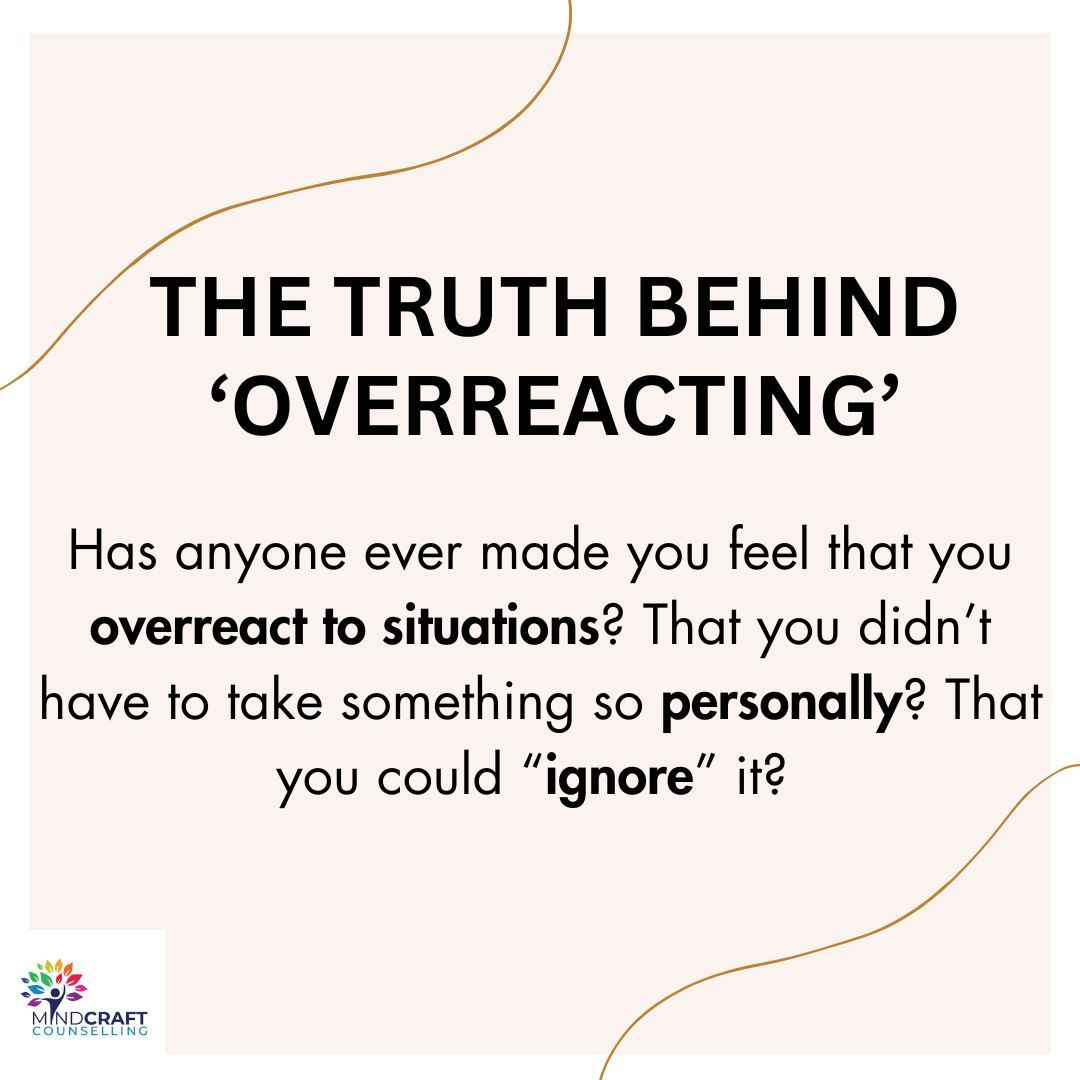
"You're overreacting." "Why are you taking this so personally?" "Just ignore it." If you've heard these lines, you'll know the particular sting they carry. They land as a verdict — that your feelings are too big, too inconvenient, somehow wrong. And often they arrive at exactly the moment you most needed someone to understand.
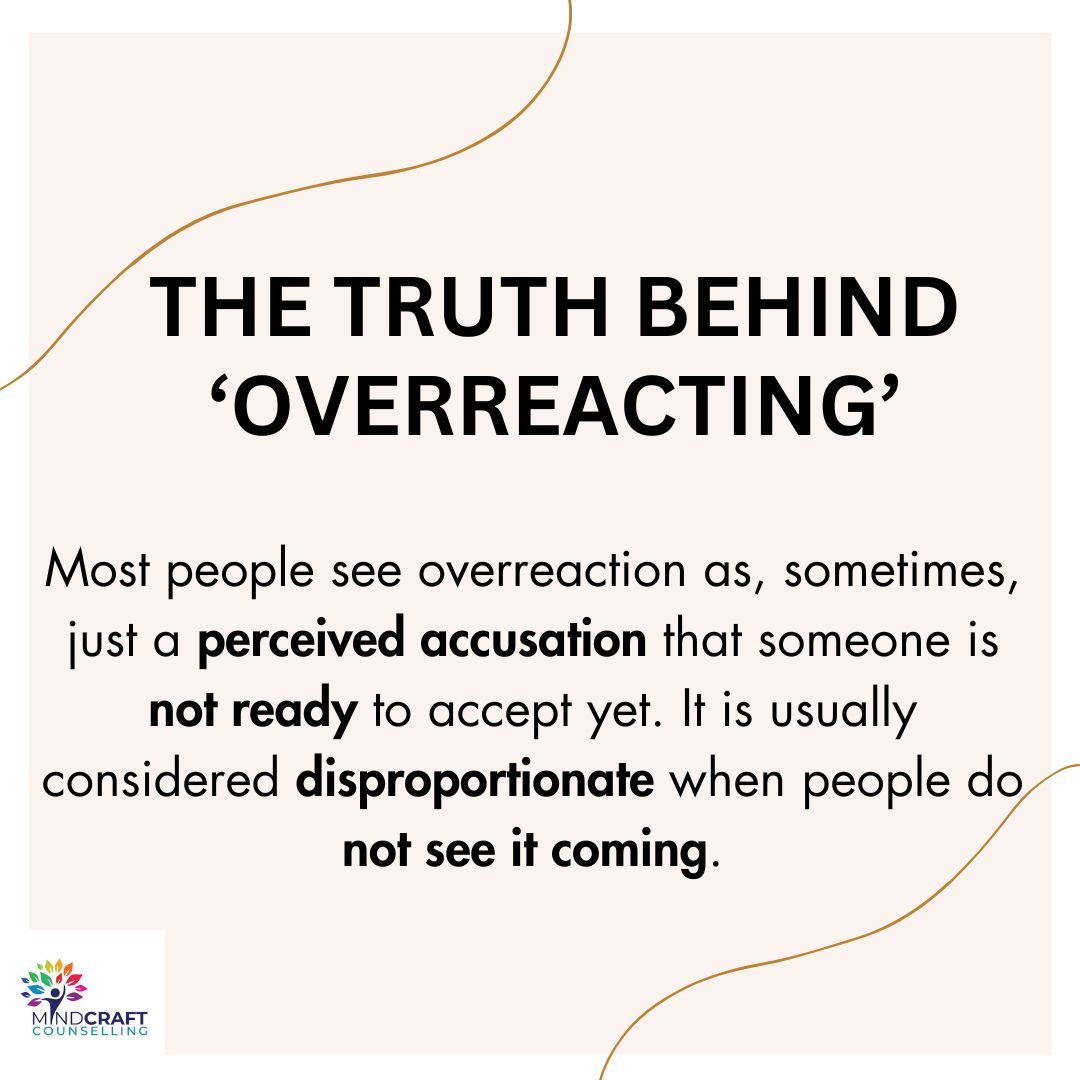
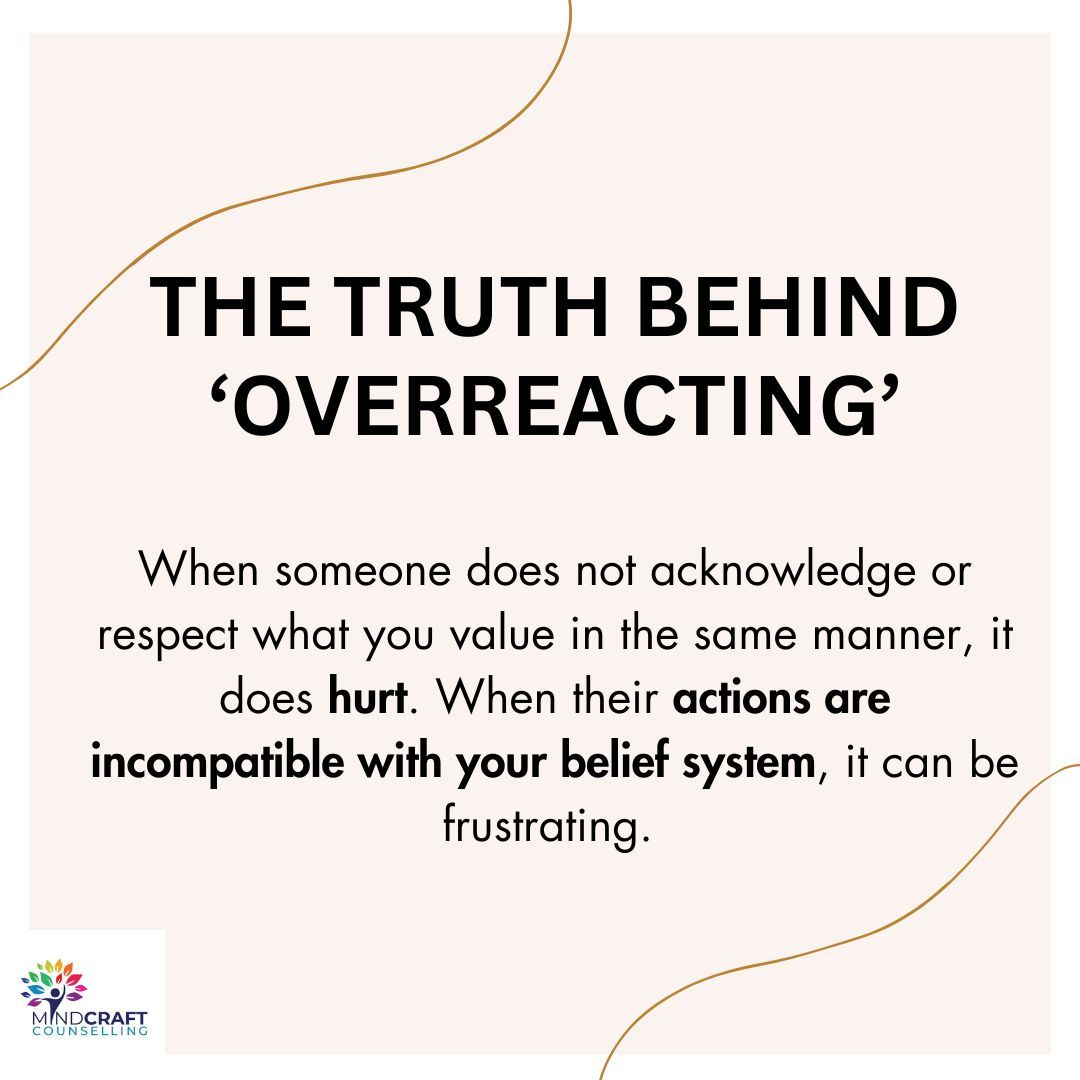
Here's the thing worth saying plainly: a reaction that looks oversized from the outside usually makes complete sense from the inside. You're not responding to one comment in isolation. You're responding to that comment plus everything it reminds you of — the times you weren't heard, the patterns you've lived through, the old wound it pressed without anyone meaning to.
Why "overreacting" is rarely the full story
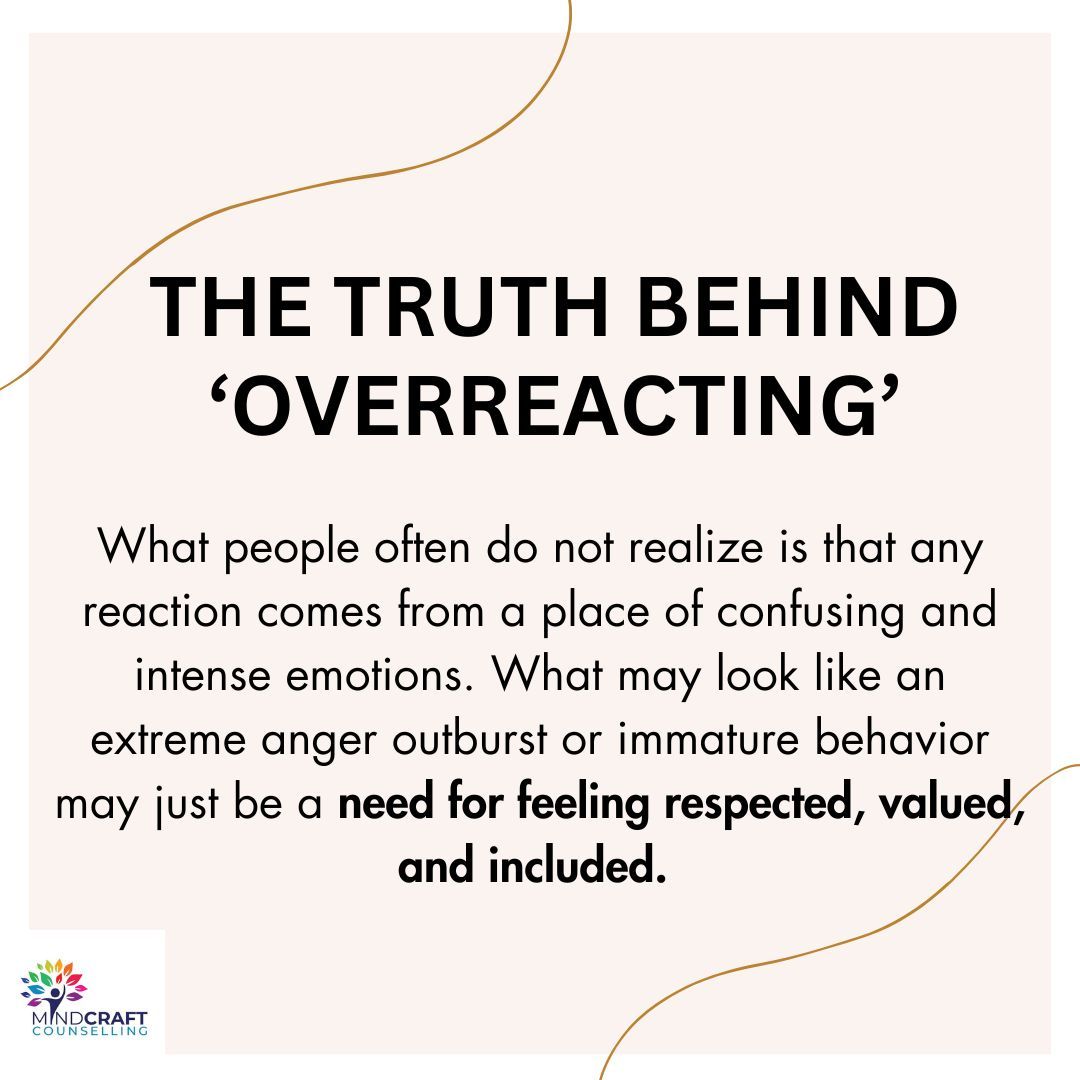
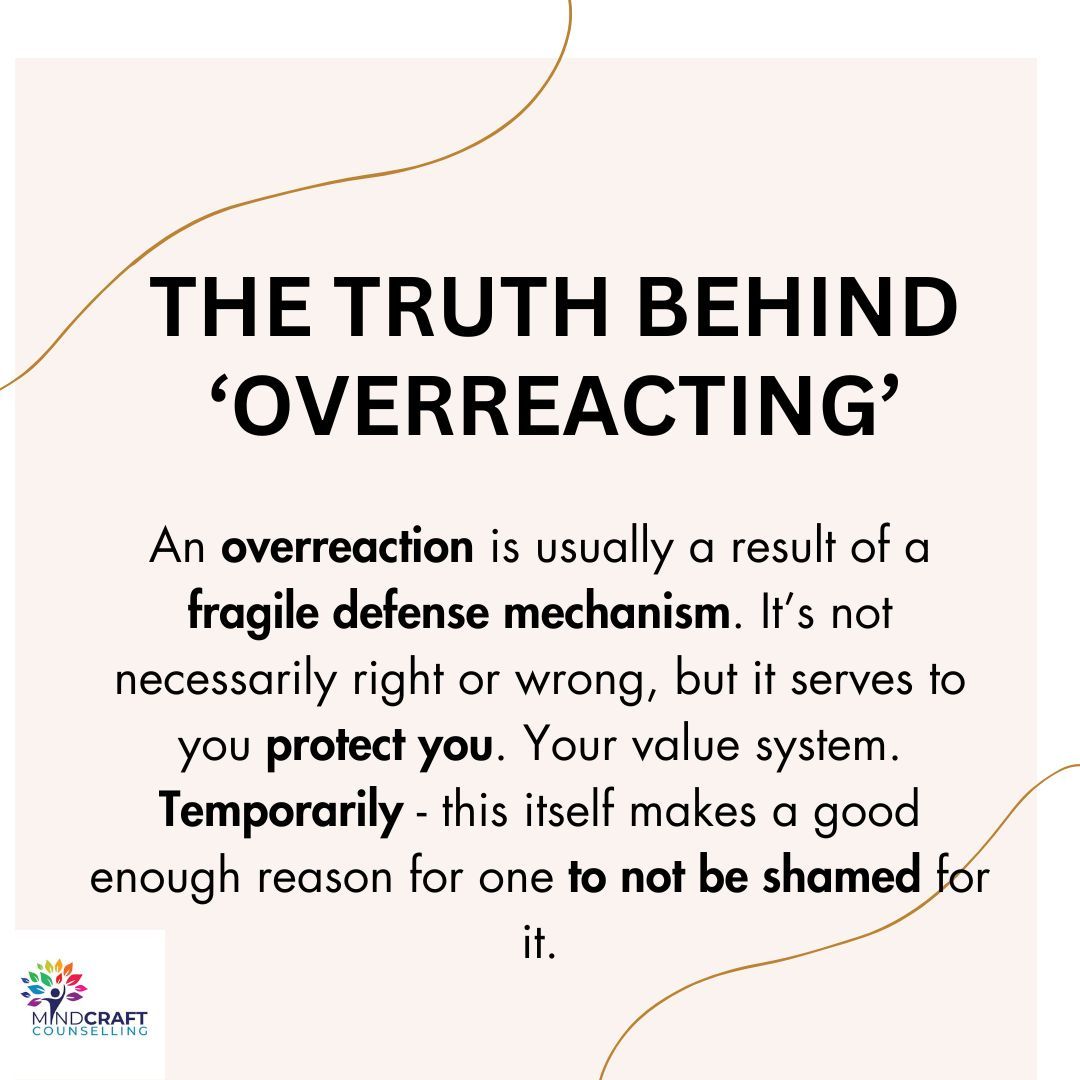
What people call overreacting is often a nervous system doing its job. When something touches an old hurt or a real fear, your body responds as though the threat is happening now. The intensity isn't proof that you're irrational. It's information about what matters to you and where you've been hurt before.
Calling that an overreaction does two unhelpful things at once. It tells you the problem is your feeling rather than the thing that caused it. And it quietly trains you to distrust your own responses — to doubt yourself before you've even understood what you're feeling.
The cost of being told to "just ignore it"
When you're repeatedly asked to shrink your reactions, you learn to do it yourself. You start editing your feelings before they're fully formed. You apologise for being upset. You wonder, in the middle of a genuine hurt, whether you're allowed to feel it at all. Over time this looks like calm, but it's closer to disconnection — being cut off from the very signals that tell you something is wrong.
Ignoring a feeling doesn't make it leave. It tends to go underground and show up later as tension, exhaustion, or a sudden flood that seems to come from nowhere. The feeling was always there. It was just told to be quiet.
A gentler way to meet your reactions
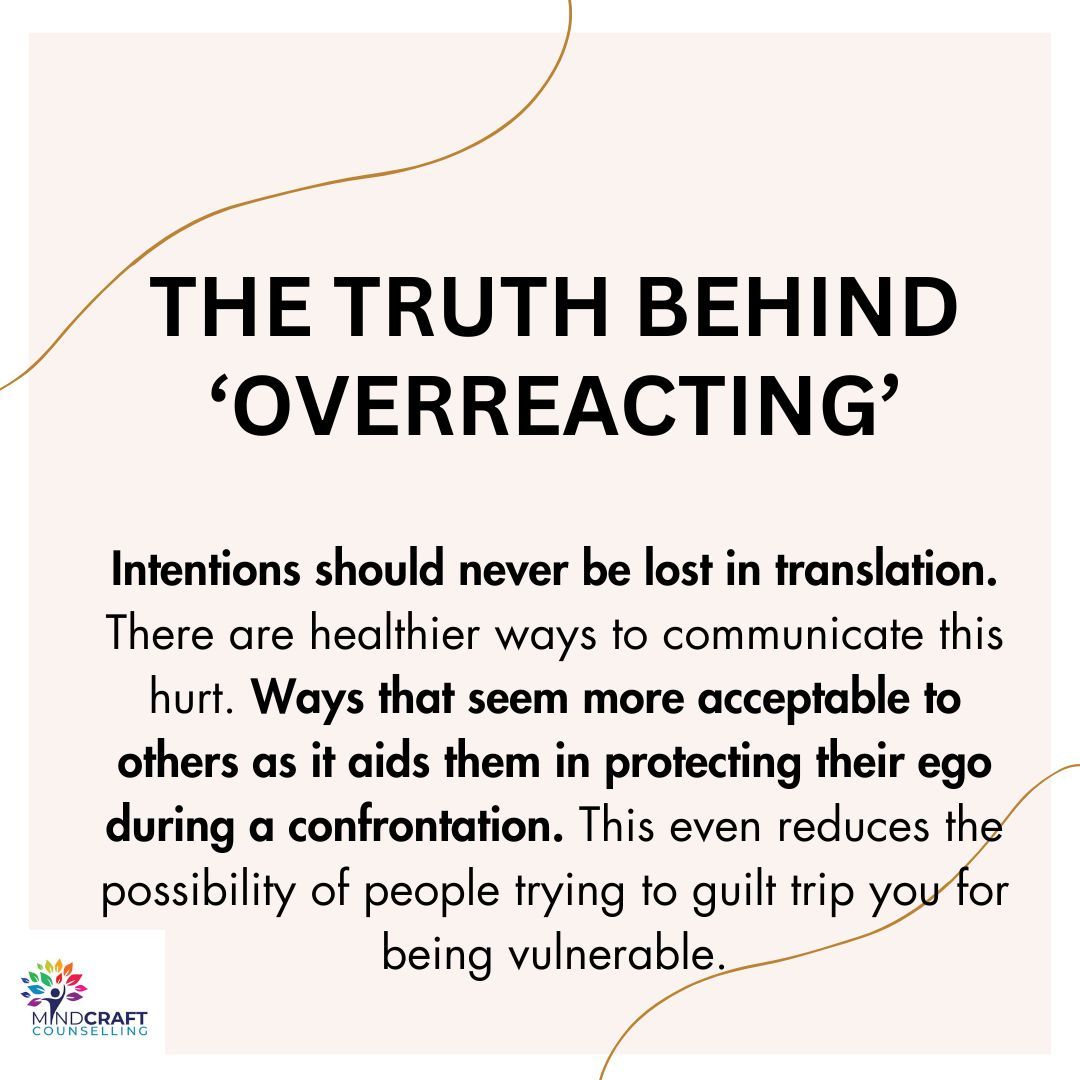
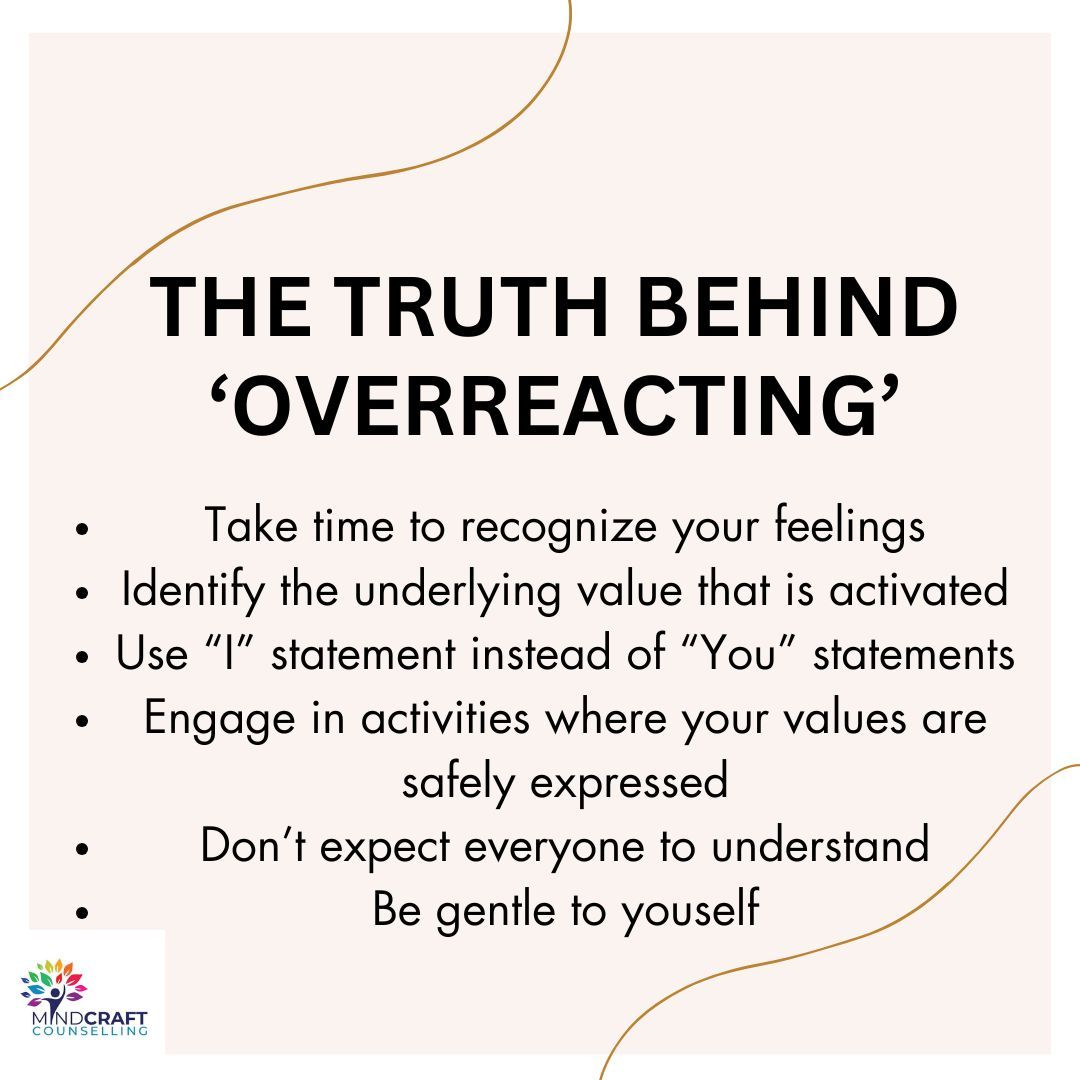
You don't have to choose between exploding and erasing yourself. There's a middle path that takes your responses seriously without being ruled by them.
- Pause and name it. Instead of "I'm overreacting," try "I'm having a strong reaction — I wonder what it's about." Curiosity loosens shame.
- Look for the echo. Ask whether this moment reminds you of something older. Often the size of the feeling points to its real source.
- Honour the message before you judge the volume. Even an intense reaction usually contains a true need: to be respected, included, safe, or believed.
- Choose your response separately. Feeling something fully and acting on it are two different steps. You can take your time with the second one.
Strong feelings are not a flaw in your character. They're a sign that you're paying attention to your life. The goal isn't to feel less — it's to understand yourself enough that your reactions become something you can listen to rather than fight.
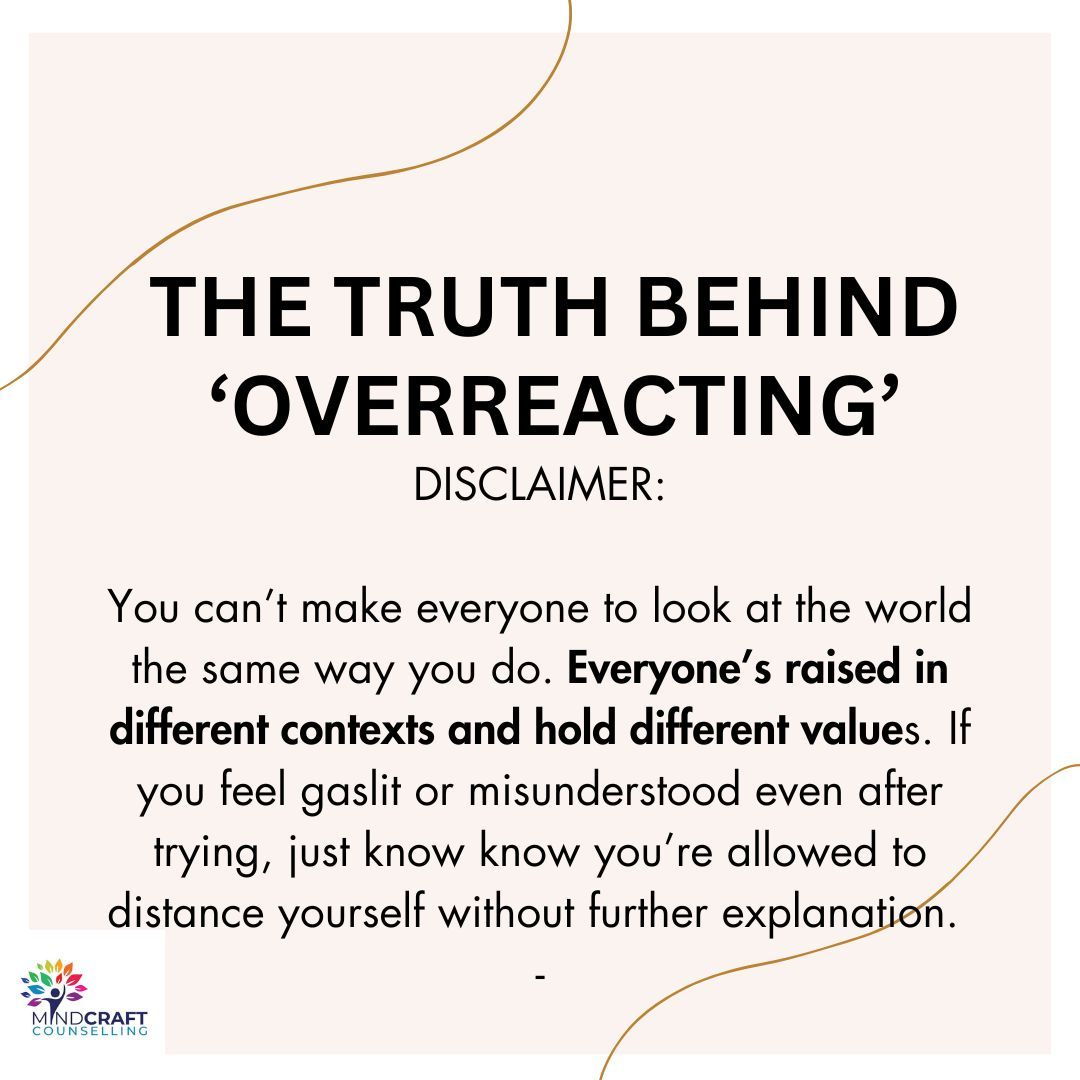
If someone has spent years telling you that you feel too much, it may take a while to believe otherwise. That's alright. You can start small, with one moment where you let your reaction be real instead of wrong.