A common hope people bring to their first session is the wish to stop feeling so much. They want the anger to go quiet, the sadness to lift, the anxiety to switch off. It's an understandable wish — when an emotion is loud, the obvious relief seems to be silence. But therapy isn't built to flatten you into calm. It's built to help you feel what you feel and still function, still choose, still stay yourself.
Think of learning to swim. The water doesn't disappear and the pressure of it never quite goes away. What changes is you — your breathing, your trust in your own body, your ability to stay afloat instead of thrashing. Difficult emotions work the same way. The aim isn't an empty pool. It's the capacity to be in deep water without drowning.
What "working with" an emotion actually looks like
Each feeling asks for something slightly different, and part of the work is learning which response fits which moment.
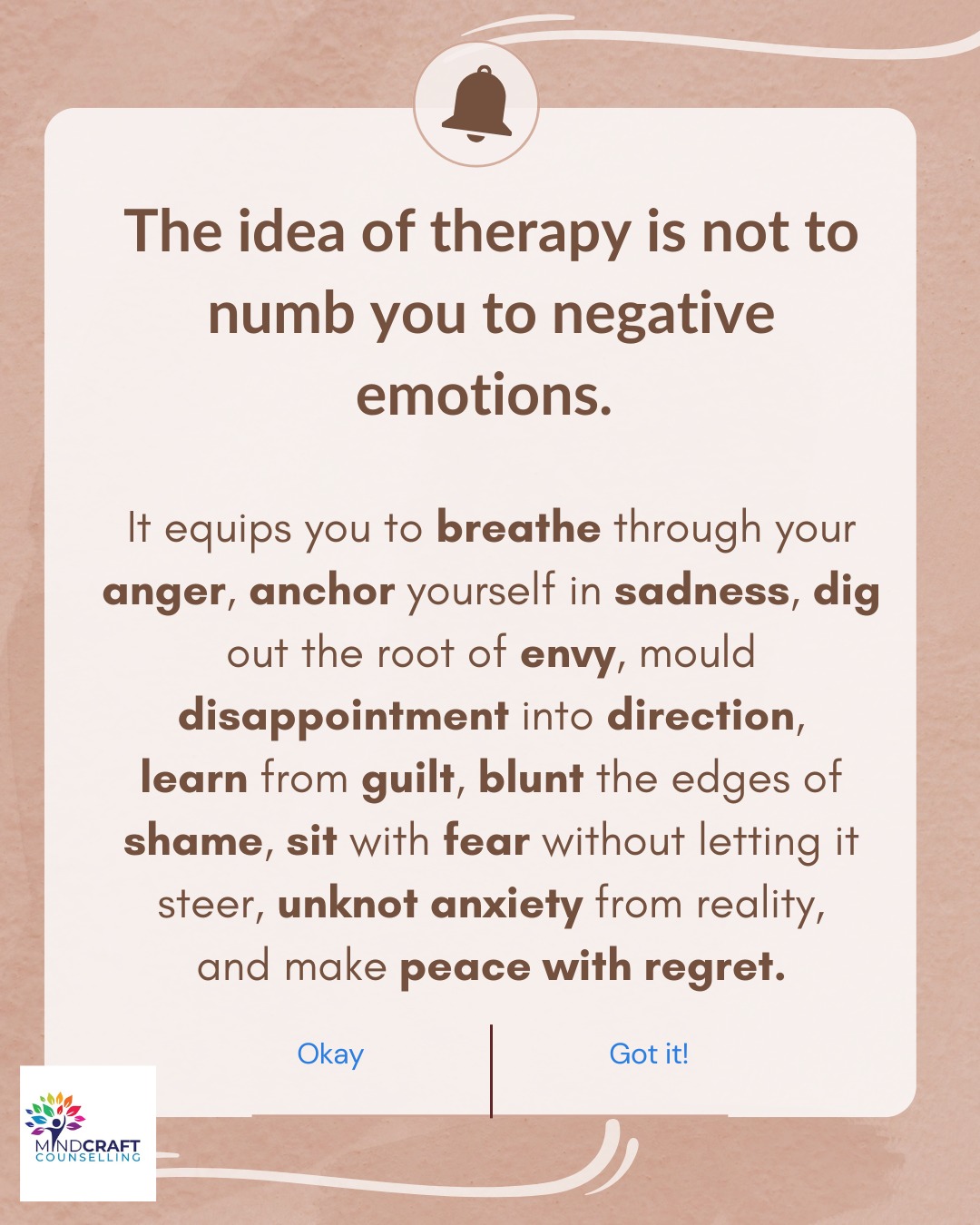
- Anger — breathing through it so you can act on the message underneath rather than the heat on top.
- Sadness — anchoring yourself in it, letting it move through rather than bracing against it.
- Envy — digging out the root, because envy usually points at something you genuinely want or lack.
- Disappointment — moulding it into direction, using the gap between hope and reality as information.
- Guilt — learning from it, separating the useful signal from the punishing noise.
- Shame — blunting its sharpest edges so it stops defining who you are.
- Fear — sitting with it without letting it steer every decision.
- Anxiety — unknotting it from reality, noticing where the story has run ahead of the facts.
- Regret — making peace with it, since you can't edit the past, only your relationship to it.
None of this is about becoming a person who no longer feels uncomfortable. It's about becoming someone whose emotions inform them instead of flooding them.
Why numbness isn't the goal
When we numb one feeling, we tend to numb across the board. The same switch that mutes grief also mutes joy, tenderness and the pull of things that matter. People who try hard to feel nothing often describe a strange flatness — relief from the pain, yes, but also a distance from their own lives. Emotions are signals, not faults. Anger flags a boundary. Fear flags risk. Sadness flags loss. Silencing them costs you the information.
The slow part is the point
Staying afloat takes practice, and early on it can feel like you're getting worse before you get better — because you're finally feeling things you'd been holding off. That's not failure. That's the water teaching you to swim. With guidance, the panic of going under softens into a skill you can rely on, even when the pressure stays exactly where it always was.
You won't leave therapy with a quieter life. You'll leave with a steadier you inside it.