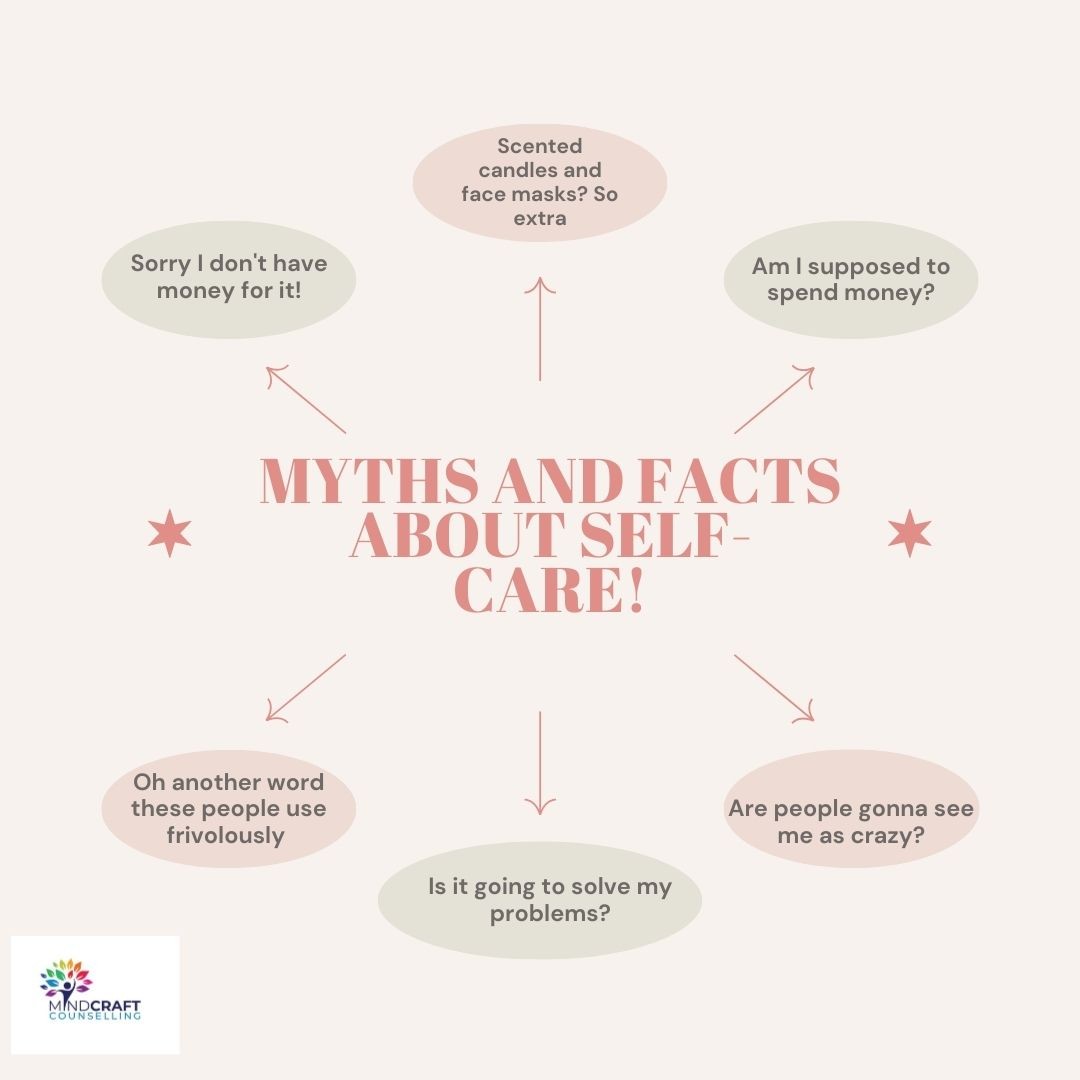
Mention self-care and watch the reactions. Someone pictures scented candles and a face mask. Someone else mutters that it's another word people throw around without meaning it. A third person quietly thinks, am I supposed to spend money on this? Few concepts in mental health get misread as often, and the misreadings keep people from doing the very things that might help them.
So let's separate what self-care actually is from what marketing made it look like.
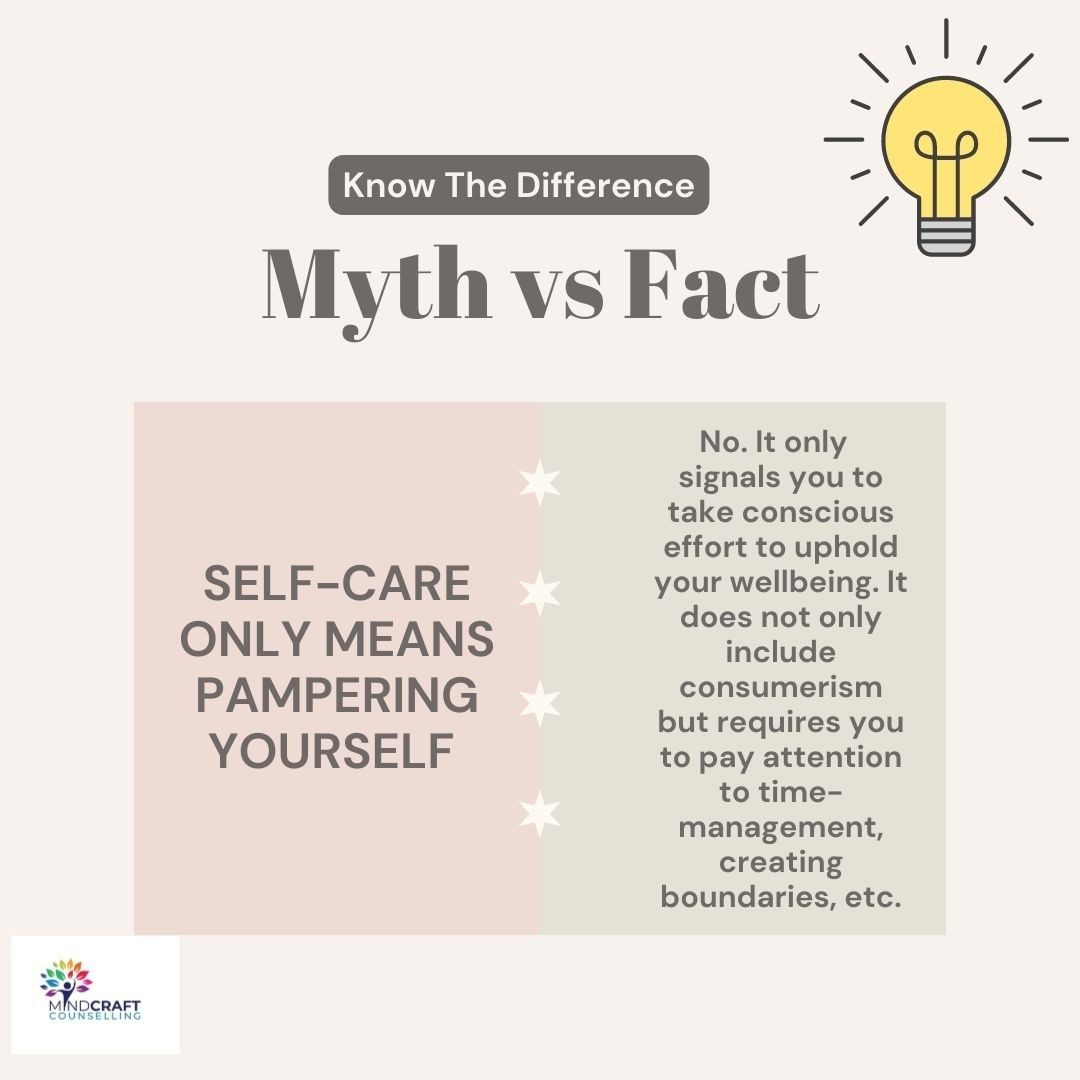
Myth: self-care means buying things
The version sold to us is a glossy one — bath bombs, spa days, expensive candles. No wonder a common response is "sorry, I don't have money for it." But the truth is that most genuine self-care costs nothing. Drinking enough water. Saying no to a plan you're too tired for. Going to bed instead of scrolling. Taking a walk. Asking for help. None of that needs a credit card.
The candle isn't the problem. Treating self-care as something you purchase rather than something you practise is where it goes wrong.
Myth: it's frivolous
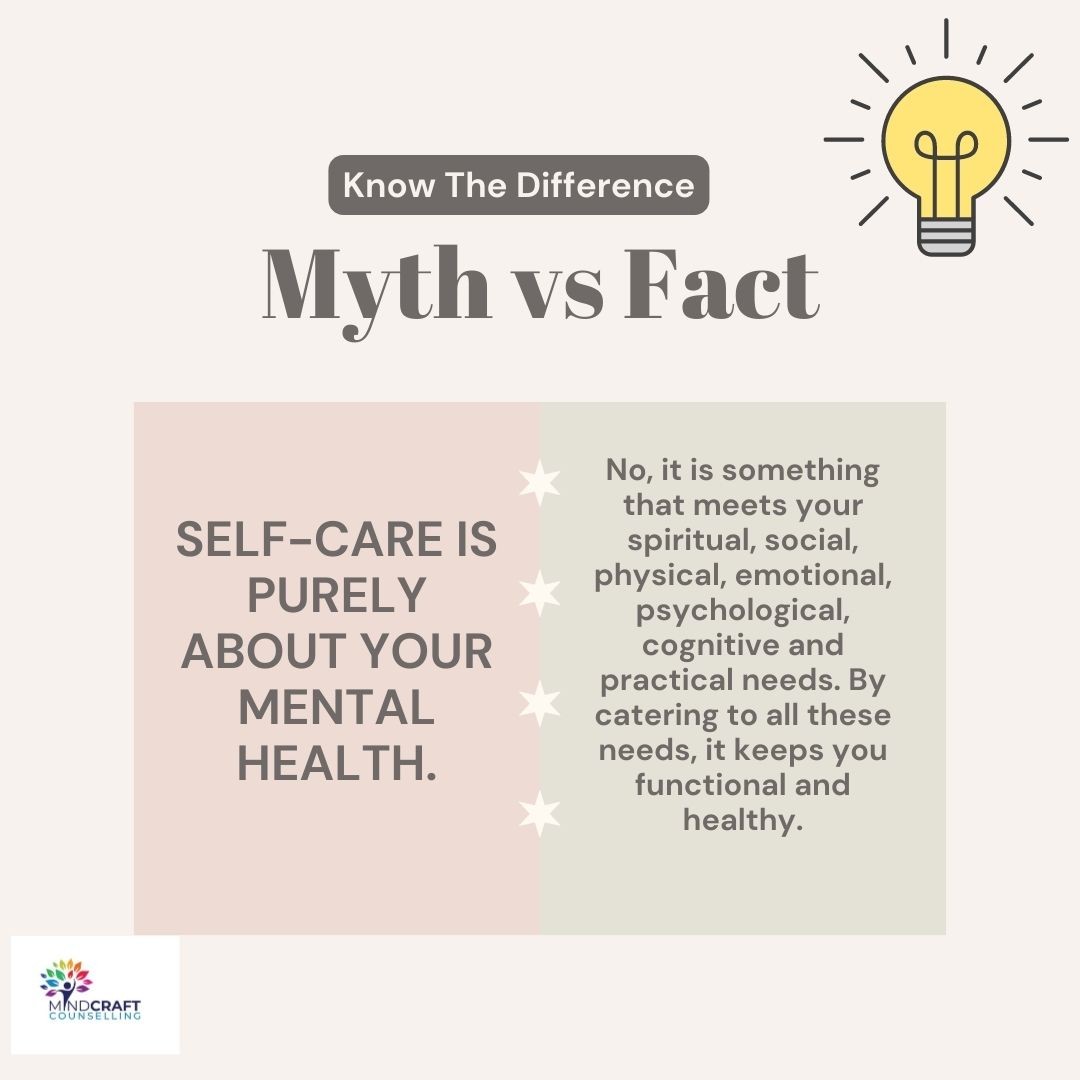
"Oh, another word these people use." Self-care has been overused to the point that it can sound hollow. But strip away the branding and you're left with something basic and unglamorous: meeting your own needs so you can keep functioning. Eating properly, resting, managing stress, maintaining the relationships that hold you up. There's nothing indulgent about that. It's maintenance, the same way you'd service a car you depend on.
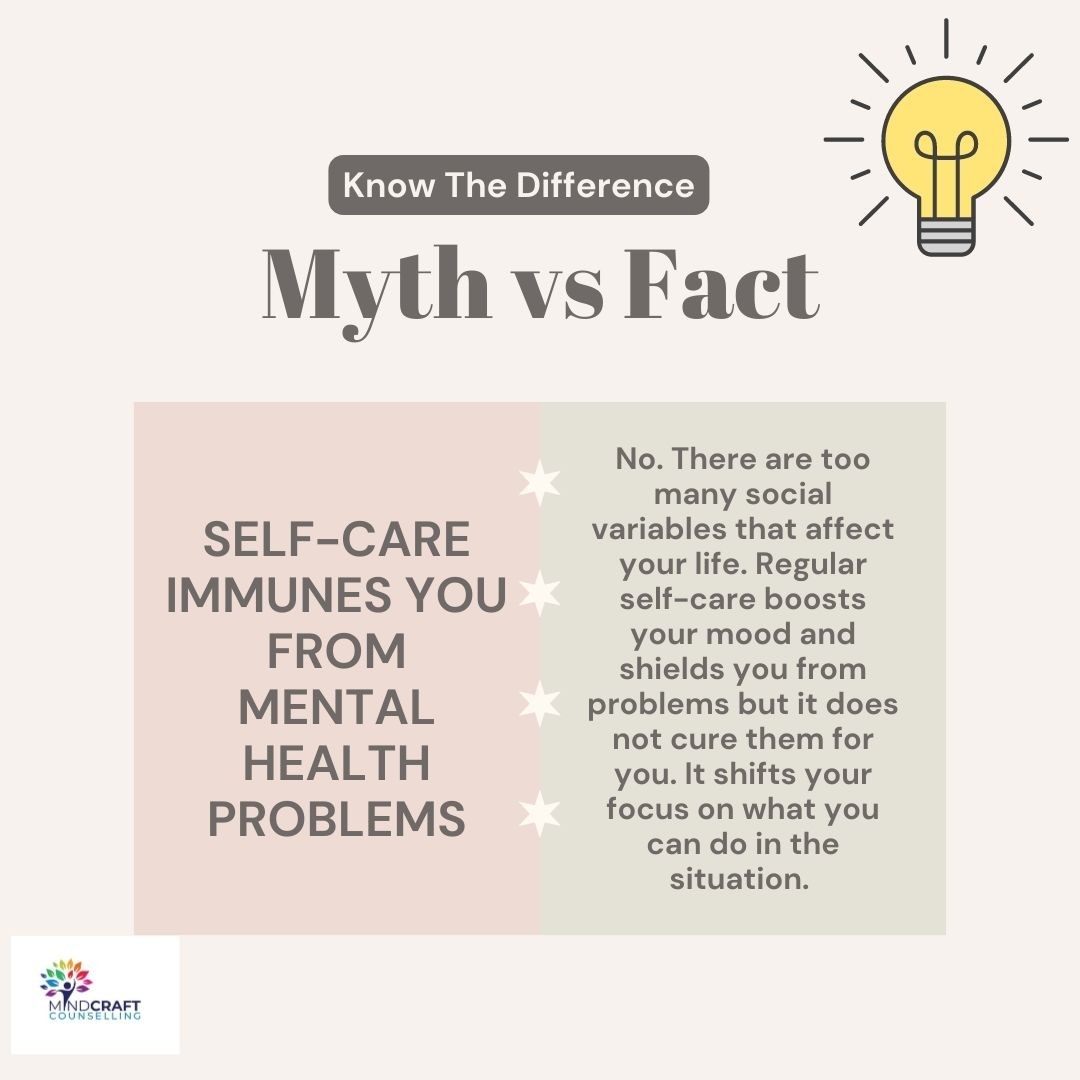
Myth: it should solve my problems
This one trips people up. "Is it going to fix things?" Self-care isn't a cure. A good night's sleep won't pay your bills or mend a difficult relationship. What it does is give you a steadier base to face those things from. When you're depleted, every problem feels heavier and your capacity to think clearly shrinks. Self-care doesn't remove the load — it builds the strength to carry it, and the judgement to know when you can't carry it alone.
Myth: people will think I'm strange
"Are people going to see me as crazy?" Setting a boundary, taking a break, prioritising your wellbeing — somehow these can feel like things you have to justify. They aren't. Looking after yourself is ordinary and necessary, not self-indulgent or attention-seeking. The discomfort usually comes from old messages that put everyone else's needs ahead of yours.
What self-care actually looks like
It's quieter and less photogenic than the version online. Some of it is genuinely small:
- Resting without earning it first
- Eating regularly and moving your body in a way you don't dread
- Saying no, or saying "I need a minute"
- Reaching out to someone when you're struggling
- Letting yourself feel a difficult emotion instead of pushing it down
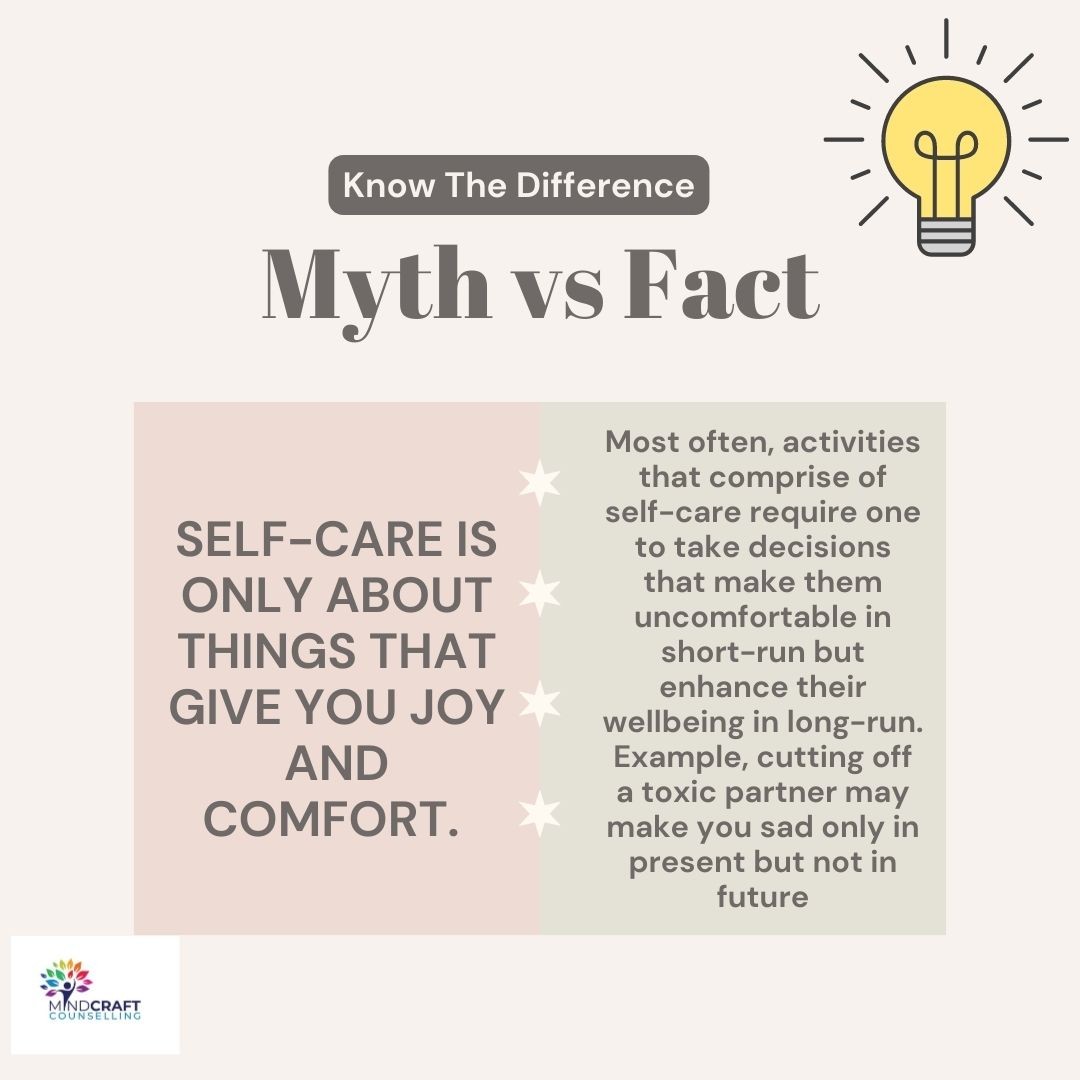
Real self-care is often the unsexy choice — going to bed, having the awkward conversation, booking the appointment you've been avoiding. It rarely feels like a treat. It feels like respect for yourself.
If self-care has felt like one more thing you're failing at, or one more expense you can't justify, it might help to drop the version you were sold. Underneath the candles and the hashtags, it's simply the practice of treating your own needs as real. That's available to everyone, and it doesn't cost a thing.