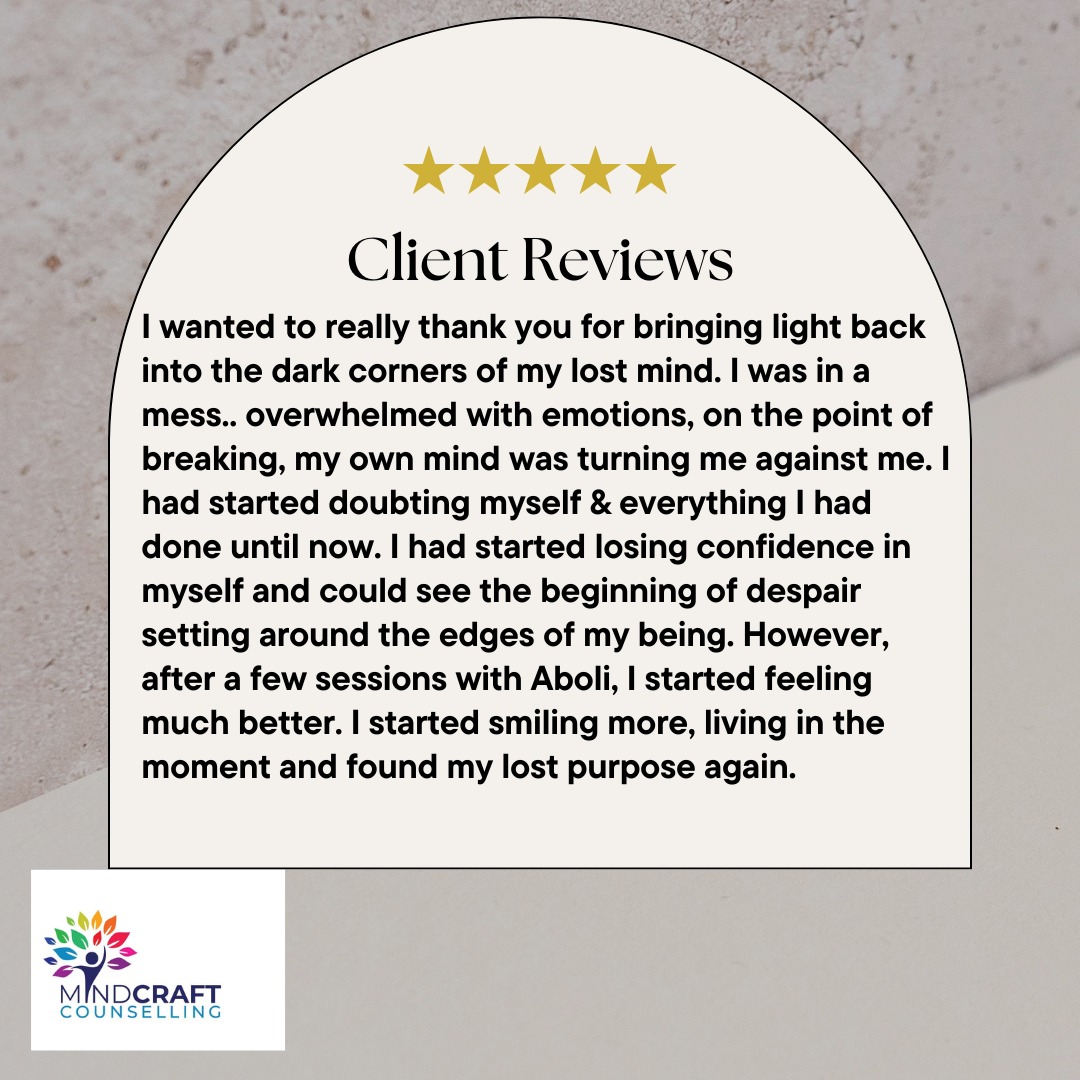

A client recently described their sessions in a way that stayed with us: "I learn and unlearn so much about myself and my thought processes. They calm my thoughts and leave me with a sense of lightness." That word — lightness — captures something real about what therapy can do. Not a sudden fix, not a dramatic breakthrough every week, but a slow loosening of the weight you've been carrying without quite noticing it was there.
We don't share feedback like this to advertise. We share it because it names the experience well, and because people who haven't tried counselling often have no idea what to expect from it.
Why both learning and unlearning matter
Most of us arrive in adulthood with a stack of beliefs about ourselves that we never consciously chose. I have to be useful to be loved. Anger is dangerous. If I slow down, everything will fall apart. These ideas were often sensible responses to something earlier in life. The trouble is they keep running long after they've stopped helping.
Good therapy works in two directions at once. You learn new things — about your patterns, your triggers, the way your mind talks to itself. And you unlearn old rules that no longer fit the person you are now. The unlearning is often the harder, quieter work, because those rules feel like simple truth rather than something you picked up along the way.
The point of a safe, non-judgmental space
The client mentioned feeling able to open up because the environment felt safe and free of judgement. This isn't a nicety. It's the actual mechanism. You can't examine a thought honestly if part of you is braced for criticism. When the room is genuinely non-judgmental, you start saying things out loud that you'd normally hide — even from yourself — and that's where the real movement happens.
A counsellor isn't there to approve or disapprove of you. They're there to help you see clearly, to slow down a racing mind, and to sit with you while you make sense of things that have felt tangled for a long time.
What "calming your thoughts" really means
People sometimes expect therapy to involve being told what to do. More often it's the opposite. When your thoughts are spinning, having someone help you lay them out, name them, and notice which ones are facts and which are old fears — that alone brings the volume down. Lightness comes not because problems vanish, but because you stop being so alone with them.
A few things tend to make that shift more likely:
- Showing up regularly, even on the weeks you don't feel like it
- Being willing to be honest rather than tidy
- Letting yourself be curious about your patterns instead of ashamed of them
- Giving the process time — change rarely arrives on a single day
If you've been wondering whether counselling might help, this is roughly what the experience can offer: not someone to fix you, but someone to think alongside, in a space where you finally feel safe enough to put things down. The lightness that follows is yours. The work that makes it possible is shared.