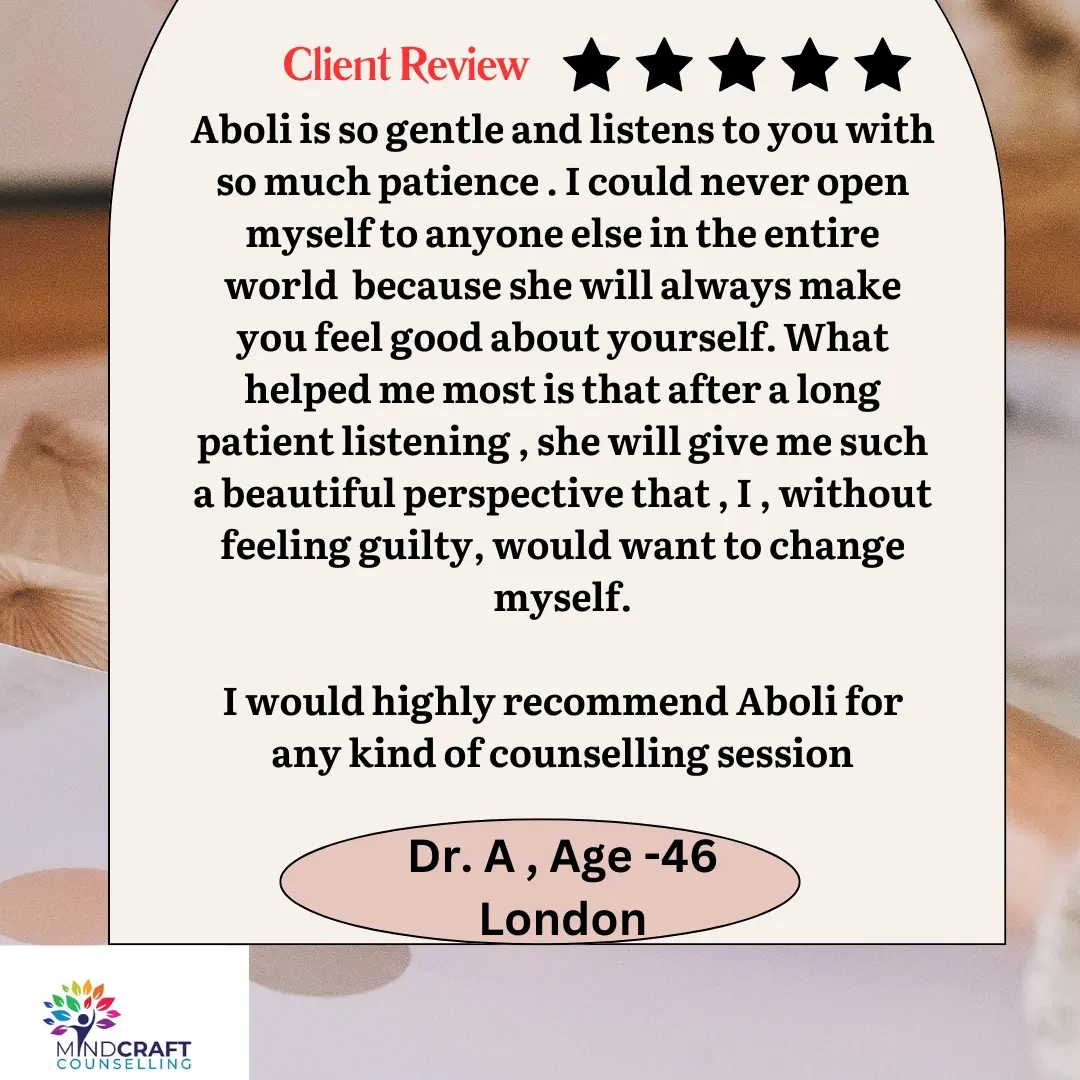
One of our clients put something into words recently that captures what good counselling actually feels like from the inside. They said that after a long stretch of patient listening, they were offered a perspective so gentle that they wanted to change — without feeling guilty about it. That last part is the whole point.
Most people arrive at therapy already carrying a heavy load of self-criticism. They know what they'd like to be different. What stops them isn't a lack of insight; it's the shame wrapped around the problem. When change is presented as something you should have done already, it tends to land as another failure. People dig in, defend themselves, or quietly decide they're beyond help.
Safety isn't a soft extra
There's a reason the client mentioned feeling safe before they mentioned changing. The nervous system can't do meaningful, considered work while it's braced for judgement. When someone listens without rushing to fix you, your body slowly registers that this is not a threat. Only then does honest reflection become possible.
This is why patience in a session is not the counsellor being passive. It's the groundwork. Long, attentive listening tells you that your full story is worth hearing — not just the tidy version you'd share at a dinner party. From that place, a new perspective doesn't feel like a correction. It feels like a door you'd actually like to walk through.
Change without guilt
Guilt is a poor engine for lasting change. It might push you to act for a week, but it burns out, and it leaves you resenting the very thing you set out to do. Change that holds tends to grow from a different feeling — curiosity, or a quiet sense that something better is genuinely possible for you.
A good counselling relationship reflects you back warmly enough that you can see yourself clearly. You notice the pattern. You feel some compassion for the version of you that built it. And from there, wanting to do things differently stops being a punishment and becomes a choice.
What you can take from this
You don't need a counsellor to begin building a little of this for yourself.
- Notice how you talk to yourself about the things you'd like to change. Is it the voice of a critic or of someone on your side?
- Before problem-solving, give yourself the same patient hearing you'd want from someone else.
- Treat curiosity as more useful than self-judgement — ask why a pattern made sense once, rather than only why it's wrong now.
If opening up feels impossible right now, that's not a flaw in you. It usually means you've never had a space safe enough to try. That space can be built, slowly, with the right person.
Reading a stranger's experience won't replace your own, but it can loosen the belief that you have to sort everything out alone first. You don't. The feeling good about yourself and the changing tend to happen together — and they often start the moment someone really listens.