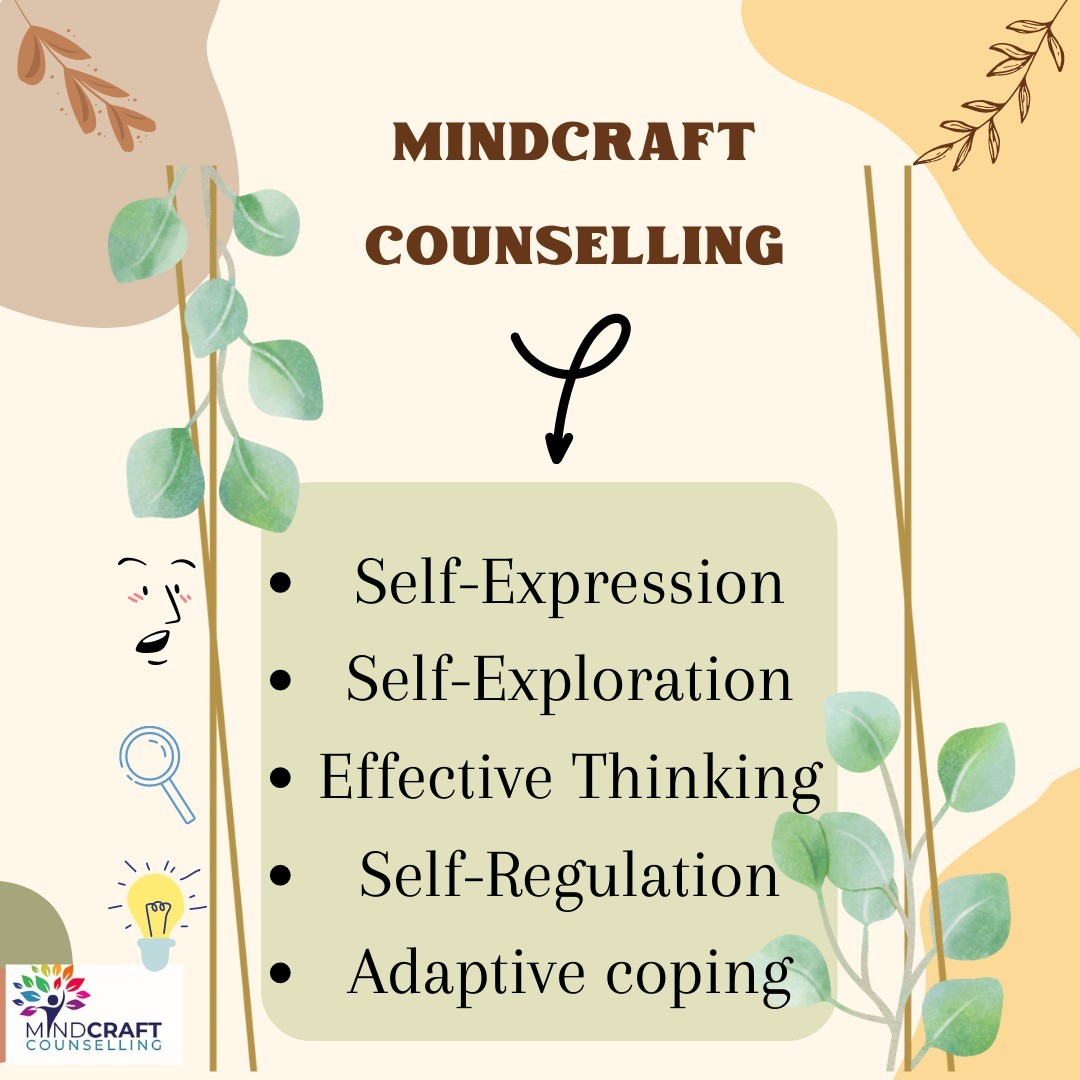
Counselling is a craft of the mind. That phrase sits at the centre of how we work at MindCraft, and it's worth taking seriously. A craft is something you train for — a skilled practice you apply with care, not a set of soothing phrases handed out at random. Untangling the complexities of the mind into a coherent, helpful narrative takes a scientific skillset, and it takes empathy, acceptance and respect layered on top. When people ask what actually happens in a counselling room, the honest answer is that it tends to move through five connected things.
Self-expression
Before anything shifts, you need somewhere to put what you're carrying. A lot of distress lives in the body and the throat long before it reaches words. Counselling gives you a space to say the thing out loud — the worry you've been editing for everyone else, the feeling that doesn't sound rational. Saying it without being interrupted, judged or fixed is, on its own, a relief most people underestimate.
Self-exploration
Once things are said, you can start to look underneath them. Why does this particular situation hit so hard? What does the reaction connect to? This is the slower, more curious work — noticing patterns, tracing where a belief came from, understanding the context that shaped a response. The aim isn't to dig endlessly into the past. It's to build an enriched understanding of how you came to think and feel the way you do.
Effective thinking
Clearer understanding makes room for clearer thinking. Many of us run on assumptions we've never tested — that we're responsible for everyone's mood, that one mistake defines us, that asking for help means weakness. Counselling helps you examine those thoughts and develop a healthier perspective, one that fits the facts rather than your fears.
Self-regulation
Insight alone doesn't calm a racing heart. Learning to recognise an emotion as it rises, name it, and stay with it instead of being swept off your feet — that's a skill, and it can be practised. Gaining some control over your emotional weather doesn't mean suppressing feelings. It means having a say in how you respond to them.
Adaptive coping
Finally, you build strategies that actually help — ways to face stress, conflict and difficult decisions that don't cost you more than they give. Coping isn't about pretending life is easier than it is. It's about meeting its challenges with more steadiness and a little more optimism.
Why not do this alone?
Plenty of people manage on their own for a long time, and that's not failure. But there's something a trained, caring outside perspective offers that self-help cannot — a relationship. A positive therapeutic alliance, built on trust and honest dialogue in a climate of care, is itself part of the healing. What you say there stays there.
If any of this sounds like the kind of work you've been quietly needing, you don't have to wait until things feel unbearable. The right time to start is usually a little earlier than you think.