People often describe themselves with a kind of resignation. "I'm just an anxious person." "I've always been shy." "That's not really who I am." These statements feel like facts, but most of the time they're stories we've repeated so often they harden into identity. Personality is real and it matters, yet it isn't the locked box many of us treat it as. Here are four myths that quietly limit people, and what's actually true.
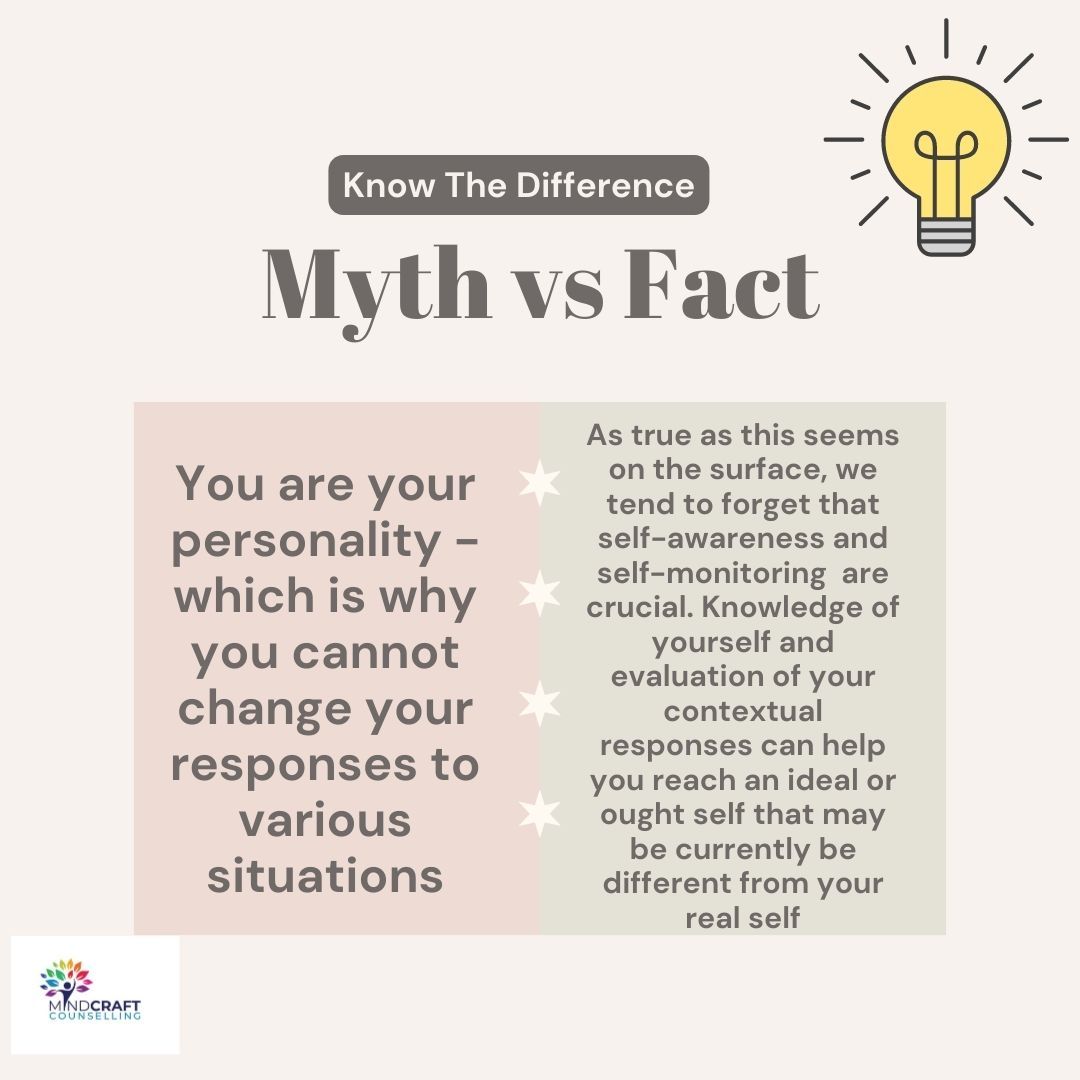
Myth 1: Your personality is fixed for life
The belief that you are simply born a certain way and stay that way is one of the most discouraging ideas around. Research on personality shows that traits do shift over the course of a lifetime, often in helpful directions. People tend to become more conscientious, more emotionally steady, and more agreeable as they move through their twenties and thirties. Change is usually slow and shaped by experience rather than willpower, but it happens. You are not stuck with the version of yourself you were at sixteen.
Myth 2: Your personality decides your fate
It's easy to assume that being introverted means you'll never lead, or that being sensitive means you'll always struggle. Personality sets tendencies, not destinies. A quiet person can become a thoughtful, respected leader. A reactive person can learn skills to pause before responding. What you do with your traits matters more than the traits themselves. Personality is the soil; the life you grow in it depends on tending.
Myth 3: There's a "good" and a "bad" personality type
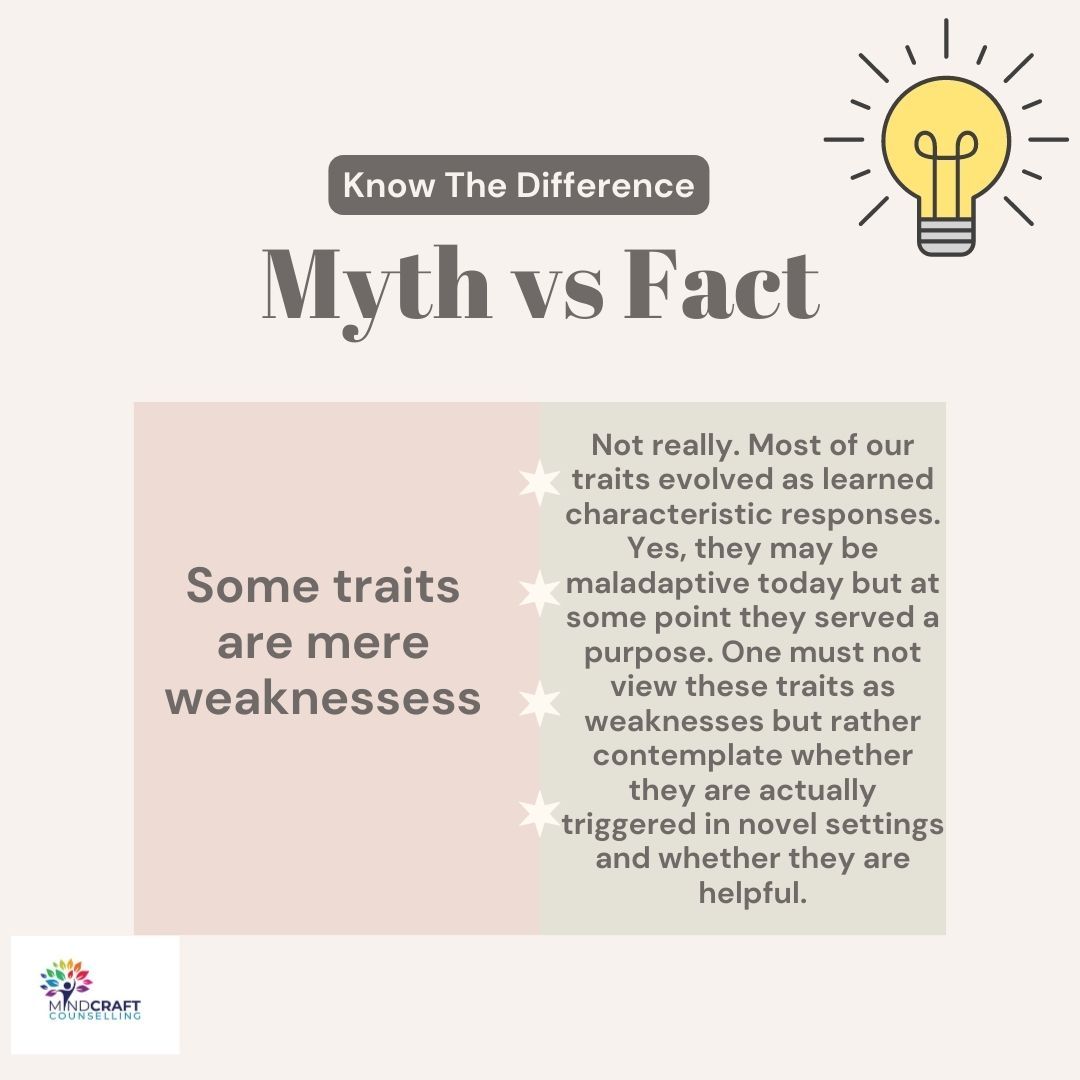
So much of popular advice treats certain traits as flaws to fix. But most traits carry both gifts and costs depending on the situation. The same caution that holds you back in one moment protects you in another. High sensitivity can feel overwhelming, and it can also make you deeply attuned to others. The goal isn't to become a different type of person but to understand your own patterns well enough to work with them rather than against them.
Myth 4: A personality test tells you who you really are
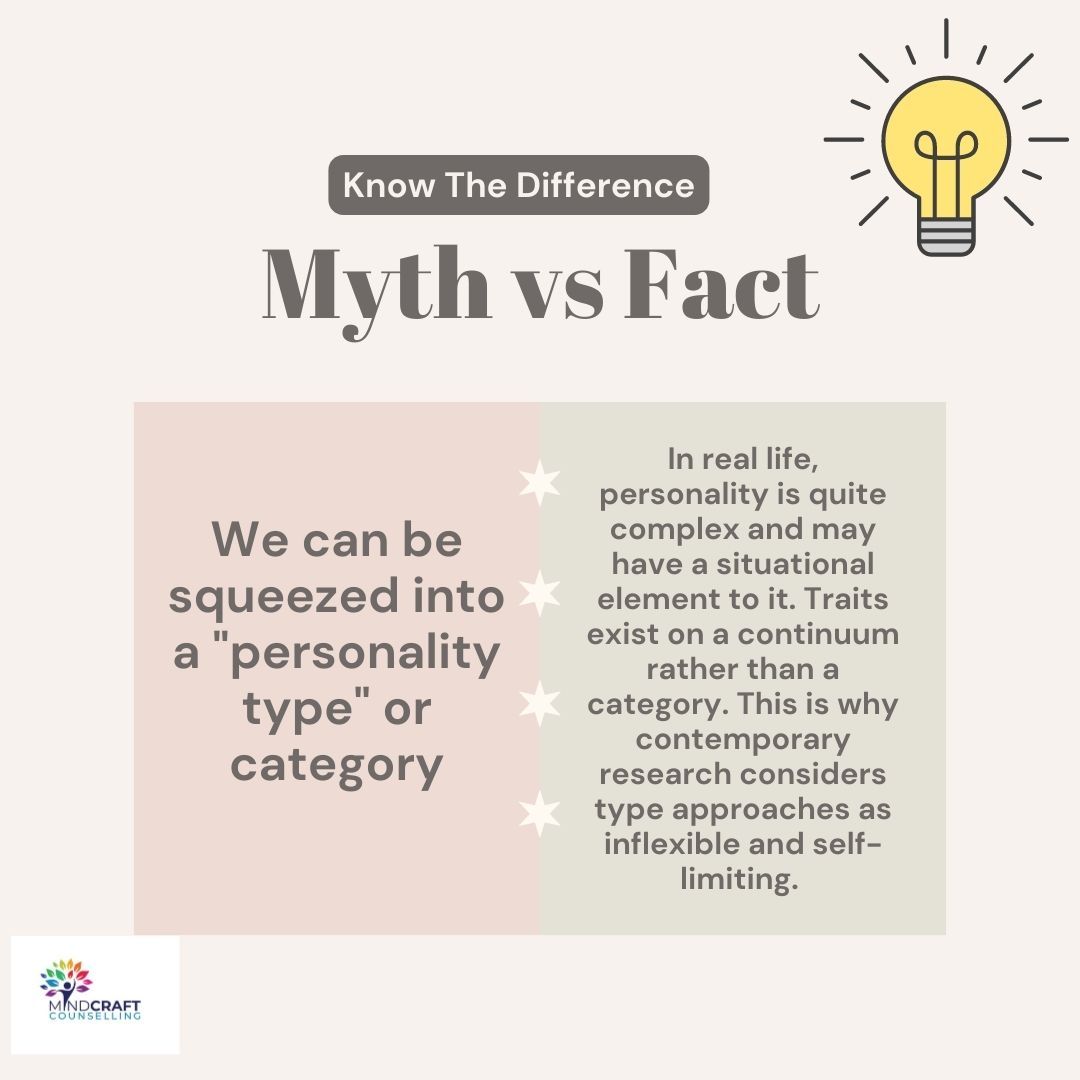
Quizzes and type labels are popular because they feel clarifying. They can offer language for things you already sensed about yourself, which is genuinely useful. The trouble starts when a four-letter label becomes a reason to avoid challenges or excuse behaviour. "I'm just not a feelings person" can quietly close off relationships. A test is a snapshot and a starting point for reflection, not a verdict.
What this means for you
If your personality has ever felt like a wall, it might help to notice the gap between describing yourself and condemning yourself. There's a real difference between "I find new situations hard" and "I'll never be the kind of person who copes." One leaves room to learn a skill; the other closes the door.
You don't have to overhaul who you are. Most meaningful change is smaller and steadier than that. It's the introvert who practises speaking up in one meeting, the anxious person who learns to breathe before reacting, the self-critical one who tries a kinder inner sentence. Personality gives you a starting place. Where you go from there is still being written.